University of Toronto India Foundation

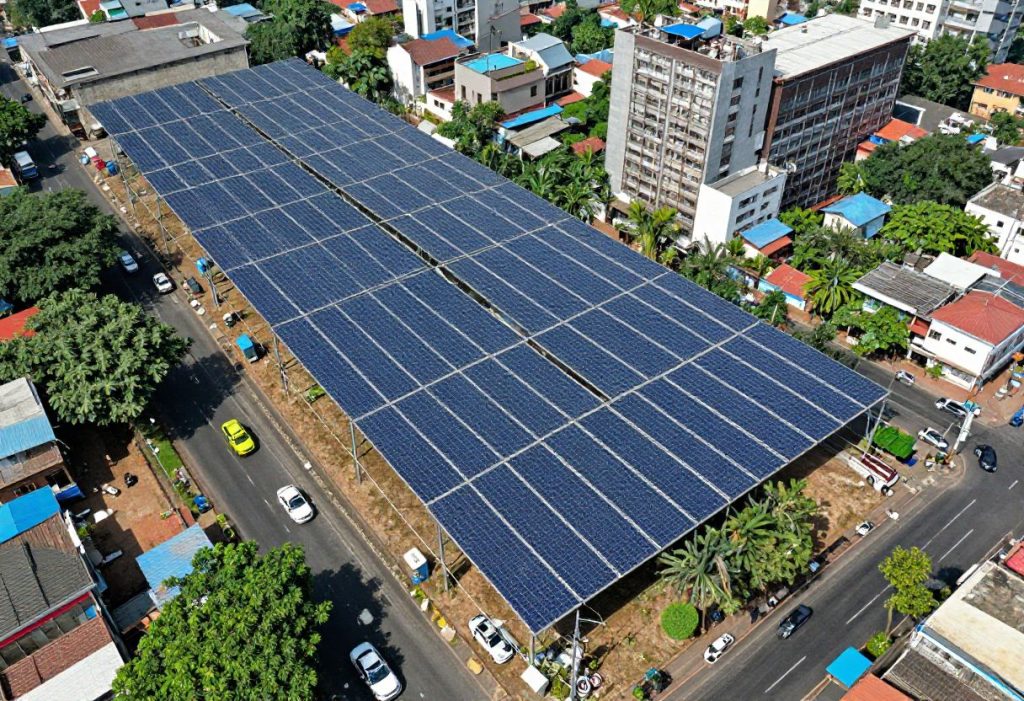
Table of Contents
Renewable Energy in India's Cities: How Urban Areas Can Lead the Clean Energy Transition


India’s urban centers represent a growing population of approximately 35 per cent, however, they account for almost 40 per cent of total energy use in India. The growing demand for energy due to urbanization presents an opportunity for cities to continue to generate large amounts of carbon pollution while at the same time leading the way towards clean energy transitions through example-setting innovations, providing examples of ways to engage the broader community in reducing carbon emissions.
With the ever-increasing use of renewable energy sources in India, urban areas have increasingly become “test cases” to evaluate distributed power generation, micro-grids, new energy-storage technologies, and behaviour changes necessary to achieve large-scale decarbonization through innovation. Progressive cities now increasingly understand that the continued development of clean energy technologies will not only provide environmental advantages, but will also help promote economic development, create jobs, and improve the health of their citizens.
The Urban Renewable Energy Opportunity
Cities possess distinctive advantages for renewable energy in India deployment. Rooftop solar potential across millions of buildings represents enormous distributed generation capacity. Commercial and institutional buildings, offices, hospitals, schools, malls, have large energy consumption and roof space, making them ideal solar hosts. Industrial facilities increasingly pursue renewable energy as an operational cost reduction strategy.
Urban electricity demand patterns show potential for storage and demand management innovations. Peak demand typically occurs in the evening hours when solar generation declines, creating obvious misalignment requiring either storage or complementary generation sources. Cities pioneering solutions to this mismatch generate knowledge applicable across similar contexts.
Rooftop Solar Revolution
Distributed rooftop solar represents renewable energy in India’s most accessible urban opportunity. Cities like Bengaluru, Mumbai, and Hyderabad are witnessing rapid rooftop installation growth as costs decline and net metering policies enable consumers to export excess generation to grids. When properly implemented, net metering transforms buildings from passive electricity consumers to active generators, fundamentally changing urban energy dynamics.
The University of Toronto India Foundation supports research examining barriers and enablers of rooftop solar adoption in Indian cities. Understanding what factors influence household and commercial decisions, financing availability, awareness levels, technology trust, installation ease, helps design programs accelerating adoption. Capacity-building workshops conducted by the foundation strengthen municipal and private sector capabilities to implement solar initiatives at scale.
Cities implementing rooftop solar strategically can achieve multiple objectives simultaneously: reducing grid demand, lowering electricity costs, generating employment in installation and maintenance, and improving air quality through reduced fossil fuel dependence.
Municipal and Industrial Renewable Energy
Municipal facilities, water treatment plants, sewage facilities, waste management centers, represent strategic renewable energy deployment sites. Water pumping, wastewater treatment, and solid waste processing are energy-intensive operations often operating continuously. Installing solar and wind systems at these facilities reduces operational costs while demonstrating renewable technology viability to skeptical audiences.
Industrial zones within cities increasingly pursue renewable energy as a competitive strategy. Manufacturing competitiveness increasingly depends on electricity costs and sustainability credentials. Companies installing renewable systems gain cost advantages while meeting corporate sustainability commitments and supply chain requirements from international customers demanding clean production.
The UofT India Foundation supports research on renewable energy systems appropriate for Indian urban contexts, examining technical feasibility, economic viability, and regulatory requirements enabling deployment.
Microgrids and Energy Storage
Distributed renewable power generation, alongside energy storage and smart control systems, creates microgrids that are capable of either operating independently from the central grid or functioning as an extension of it. In addition to providing a solution to renewable energy’s variability issue, microgrids also provide increased resilience by allowing for continued operation in the event that the central grid fails. Cities are realizing how valuable microgrids can be to provide essential services such as hospitals and emergency response facilities.
Energy storage technologies, batteries, thermal storage, mechanical storage, become increasingly important as renewable generation penetration rises. Research on storage solutions appropriate for Indian urban contexts helps identify pathways to affordable, functional systems enabling higher renewable penetration.
Waste-to-Energy and Circular Integration
Urban waste represents energy resources when converted through waste-to-energy technologies. Landfill gas capture, anaerobic digestion of organic waste, and thermal conversion of non-recyclable materials all produce energy while reducing landfill burdens. Cities improving waste management in India through circular economy approaches simultaneously create renewable energy opportunities.
The UofT India Foundation supports startups and research addressing waste-to-energy integration with broader urban sustainability systems. When waste conversion produces energy, waste management becomes resource recovery rather than purely burden elimination.
Policy Enabling Clean Energy Transitions
Cities can accelerate renewable energy in India deployment through supportive policies:
Building Energy Standards: Requiring new construction and major renovations to incorporate renewable generation and efficiency ensures clean energy integration from inception rather than retrofitting existing stock.
Mandated Solar Procurement: Requiring city facilities and contractors to source renewable energy creates demand supporting market development while demonstrating municipal commitment.
Simplified Permitting: Streamlined rooftop solar approvals reduce installation timelines and costs, enabling rapid deployment once financial obstacles are addressed.
Community Energy Programs: Municipal financing and guarantee programs enabling households and small businesses to access solar reduce capital barriers preventing adoption.
Public Health Co-benefits
Clean energy transitions generate substantial public health benefits often undervalued in economic analyses. Replacing fossil fuel-based electricity with renewables reduces air pollution, India’s leading environmental health threat. Urban rooftop solar particularly benefits air quality by displacing fossil generation. Combined with improved waste management and sustainable transportation, urban renewable energy deployment contributes to healthier cities supporting improved public health outcomes.
Building Momentum
Cities demonstrating successful renewable energy in India transitions create momentum through knowledge sharing, inspiring peer adoption, and attracting investment. When Bengaluru shows rooftop solar viability, other metros pursue similar initiatives. When Hyderabad develops functional microgrids, cities replicate approaches. This demonstration effect amplifies impact beyond initial deployments.
Organizations like the University of Toronto India Foundation accelerate this momentum through research documentation, innovation support, and capacity building enabling more cities to pursue clean energy transitions successfully.
Looking Forward
The development of renewable energy in cities across India has progressed significantly and is accelerating to achieve enhanced commitments to address climate change. Urban areas have several distinct advantages associated with the potential for distributed power production, concentrated demand for energy, established success in delivering renewable energy, several policy incentives to support increased use of renewables and enhancing infrastructure to support renewables.
The next step in this evolution is to continue scaling successful examples of renewable energy projects and to address remaining barriers along with the development of the institutional frameworks required to generate ongoing movement forward.
Cities that act as leaders in the transition to clean energy systems represent blueprints for the transformation of the nation as a whole. As urban areas begin to realize the broader economic opportunities associated with installing renewable energy, the pace of transition to a decarbonized urban energy system increases. The future of the renewable energy transition across India is predicated on the assumption that cities will continue to be leaders in the transition to clean energy.
Frequently Asked Questions
Q: Can Indian cities realistically achieve 100% renewable electricity?
A: Complete renewable dependence requires technological breakthroughs in storage and flexible demand management alongside significant investment. However, cities can reach 50-80% renewable generation through combinations of rooftop solar, municipal waste-to-energy, wind where available, and regional hydropower. This substantial transition delivers major emissions reductions and energy independence benefits without requiring perfection.
Q: Why is rooftop solar adoption slower than technically possible in Indian cities?
A: Reasons for continued adoption hurdles include limitations on finance access, uncertainty as to technology reliability, installation process complexity, and regulatory inconsistency across municipalities, despite the falling costs of technology. The University of Toronto India Foundation supports research directed toward effective interventions that can mitigate the aforementioned barriers.
Q: How can cities balance renewable energy goals with electricity affordability?
A: Renewable operating costs are dramatically lower than fossil fuels once infrastructure is built. However, transition costs, upgrading grids, installing storage, building distributed generation, require financing. Cities using combinations of municipal investment, private sector engagement, customer financing programs, and phased deployment manage affordability while advancing transition.
Q: What role do communities play in urban renewable energy transitions?
A: Social acceptance and effective project rolls out require community engagement. The quicker communities learn about the benefits of clean energy, how they can be included in decision making and can directly benefit from installations, the quicker they adopt clean energy resources. Community solar programs allow people without rooftops to participate in this transition and help ensure all community members realize the benefits of the transition, not simply a select few privileged residents.
Q: How do renewable energy transitions affect employment in Indian cities?
A: Job creation occurs across installation, maintenance, manufacturing, and grid operations. While fossil fuel industry employment declines, renewable sector growth typically exceeds losses, particularly when cities invest in workforce training. The UofT India Foundation supports capacity-building addressing skill development for clean energy employment.