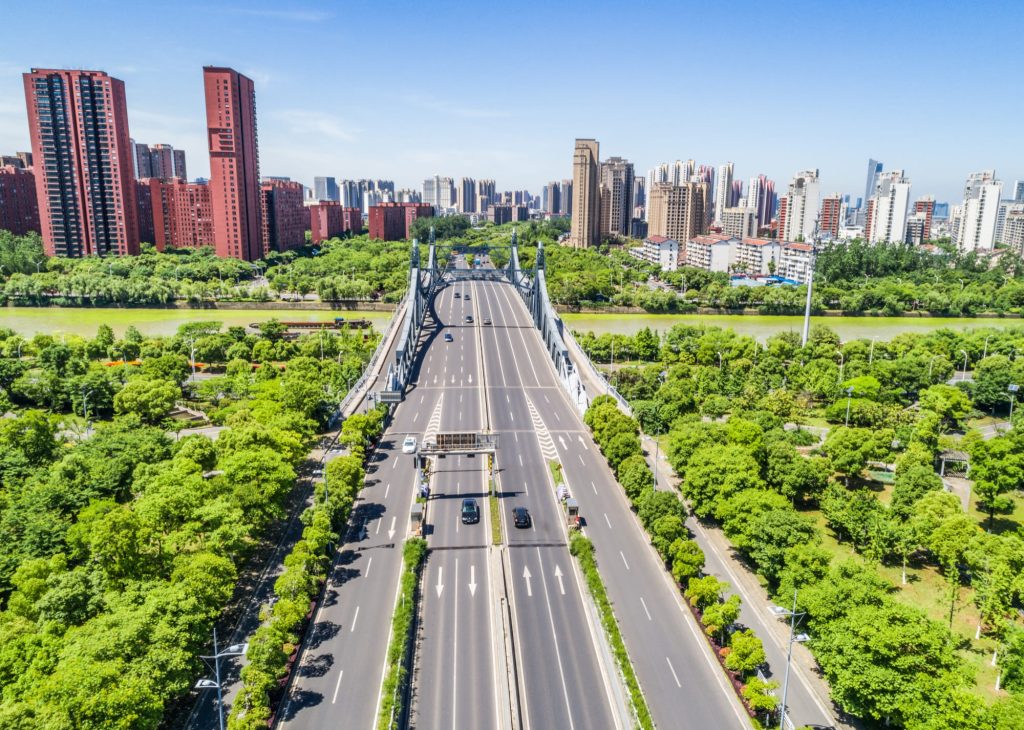
Indian cities cannot wait for perfect solutions. Heat, polluted air and leaking pipes are daily problems, and the most promising sustainable tech innovations are coming from young Indian founders. The UofT India Foundation backs these founders with grants, University of Toronto mentorship and real pilot sites. The five technologies below have already moved beyond the lab and into municipal offices, housing colonies and public roads.
1. How are low-carbon construction materials changing Indian buildings?
Indian startups are turning waste into low-carbon construction materials that cut emissions without sacrificing strength. Anguirus presses plastic and construction waste into Wricks, which absorb 80% less water than conventional bricks. RecycleX makes cement-free Eco-Concrete from industrial byproducts, cutting its carbon footprint by 80%. Strawcture Eco builds panels from 96% straw, and Carbon Craft cures wall cladding with captured carbon dioxide.
- RecycleX laid eco-concrete roads with Bharuch Municipality in Gujarat and with Bengaluru Cantonment.
- Strawcture built a community library in Mumbai’s M-Ward using its straw panels.
2. Which wastewater treatment technology suits crowded Indian neighbourhoods?
Compact, decentralised systems work best where sewer networks cannot keep up. Lambert Water’s Water Battery and Membrane Electro Reactor treat water electrochemically. The process uses 60% fewer chemicals, halves greenhouse gas emissions and produces 40% less sludge. Tellus Habitat runs automated sewage treatment with one of the lowest operating costs in the sector. Both systems were piloted at one housing colony in Vizhinjam, Kerala, treating 20 KLD and 15 KLD respectively.
3. How is AI helping cities monitor water pipes and air quality?
AI turns hidden problems into data that city engineers can act on. Solinas sends Endobot, a crawler robot, inside water and sewer pipes, then feeds its findings into SWASTH, an AI-powered dashboard. MedCore’s Airvue AQuiR system tracks indoor air quality in real time using IoT sensors and AI. Panjurli Labs builds thin-film filtration that targets industrial and vehicular emissions at the source.
- Solinas piloted pipeline inspection with Pimpri Chinchwad Municipal Corporation in Pune.
- Panjurli Labs installed large-volume purifiers at Benniganahalli Metro Station, Bangalore.
4. Which sustainable tech innovations cut energy use in Indian buildings?
Desiccant cooling and solar coatings lead the way. Albatross Energetics built a desiccant-assisted air conditioning system that cuts energy use by 30 to 50%. It works with existing HVAC units and absorbs moisture instead of relying on energy-hungry cooling alone. Trinano Technologies develops nanotechnology coatings that raise solar panel efficiency. The company also won INR 2.5 lakh from UTIF at IIT Bombay’s Eureka! competition.
- Albatross piloted a 1.6TR liquid desiccant outdoor air system at the Thiruvananthapuram Municipal Corporation office.
5. How are electric cart conversion kits helping waste workers?
Accelero’s Bik Thela kit converts old or new handcarts to run on both manual and electric power. Each cart carries up to 600 kg, reaches 18 km/h and covers 50 km on a charge that costs just INR 10. The carts need no licence or registration. For waste pickers who push heavy loads through congested lanes all day, the kit eases real physical strain.
- Accelero deployed 15 electric carts with Thiruvananthapuram Municipal Corporation.
- A further 75 electric pushcarts went to Pune’s SWaCH cooperative and Kashtakari Panchayat.
How does the UofT India Foundation help climate-tech startups scale?
The Foundation closes the gap between a working prototype and a city contract. It ran the Techtonic programme with Social Alpha, which selected 11 climate-tech startups from 120 applicants and secured pilot deployment sites through urban local bodies in Kerala and Maharashtra. Founders also received one-to-one mentoring from University of Toronto faculty, along with workshops on intellectual property, government procurement, cash flow and fundraising.
- Professor Daman Panesar mentored RecycleX on cement admixtures for stronger, more durable concrete.
- A March 2025 convening in Bangalore brought more than 50 investors, policymakers and industry leaders together with the founders.
For city officials deciding where to start, pick one visible problem, such as a leaking water main or an overheated municipal office, and pilot a proven local solution before scaling it up.
Frequently Asked Questions
What counts as sustainable urban technology?
Sustainable urban technology covers any product that cuts emissions, waste or resource use while improving city services. In India, the leading sustainable tech innovations include recycled building materials, electrochemical water treatment, AI pipeline inspection, efficient cooling and electric carts for waste collection.
How can climate-tech startups get pilot projects with Indian cities?
Most startups struggle to win municipal trust on their own. Incubation programmes that partner directly with urban local bodies help, because they bring credibility, funding and a structured approval route. Techtonic, for example, confirmed four pilots with Thiruvananthapuram and two with Pimpri Chinchwad.
Does UTIF support student climate innovators?
Yes. The UofT India Foundation committed INR 40 lakh to support five teams in IIT Madras’s Carbon Zero Challenge, which drew 1,178 applications. It also launched a Student Venture Programme with VIT-TBI and sponsored the Energy and Sustainability track at IIT Bombay’s Eureka! competition.
Are these technologies affordable for Indian cities?
Many are designed to save money from day one. Accelero’s kit covers 50 km on INR 10 of charge, and Albatross cuts cooling energy by up to 50%. RecycleX’s eco-concrete also costs less than traditional concrete, which eases pressure on stretched municipal budgets.