On Thursday, 8 October 2026, the University of Toronto India Foundation, YUVA and Raah Foundation invite policymakers, practitioners and community partners to explore how lived experience can shape climate policy.
Climate change is usually measured in degrees and decades. For a family in a Mumbai informal settlement or a tribal hamlet in Palghar, it is measured in quieter ways. It can be a lane that floods, a harvest that falls short, a meal stretched a little thinner than last season. These communities carry a deep understanding of what climate vulnerability feels like. Too often, that understanding never reaches the rooms where plans and policies are written.
On Thursday, 8 October 2026, we hope to bring those two worlds a little closer. The University of Toronto India Foundation (UTIF), together with Youth for Unity and Voluntary Action (YUVA) and Raah Foundation, will host From Community Knowledge to Action in Mumbai. The gathering will share a year of community-engaged research and ask a question that reaches far beyond one morning: how can evidence born in communities find its way into policy and practice?
A year spent listening.
During 2025-26, through the U of T School of Cities’ International Multidisciplinary Urban Capstone Program (IMUCP), we hosted students from the University of Toronto and Ashoka University. IMUCP is a year-long program that brings multidisciplinary student teams together with Indian universities and community organisations to work on real development challenges.
Last year, those teams worked alongside YUVA and Raah Foundation, two organisations whose roots run deep in the communities they serve. The students did not arrive with answers. They arrived to listen, and what they heard shaped everything that followed.
Ambojwadi, Mumbai: making room in the city’s climate plans
Cities across India are drafting climate action plans, and that is worth taking note of. The harder question is who gets written into them.
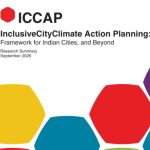
With YUVA, the team explored how climate action can be localised in Ambojwadi, keeping the experiences of informal settlement residents at the centre. Participatory research and field insights were paired with case studies and a close reading of nine City Climate Action Plans. The result is an Inclusive City Climate Action Planning Guidebook, supported by a research poster and community-facing knowledge products. It offers practical tools to spot inclusion gaps and weave community priorities into city-level climate planning.
Palghar: where climate, food and gender meet
In Palghar, the questions turned toward the soil and the kitchen. Working with Raah Foundation and Indigenous communities, the team traced the threads that connect climate vulnerability, livelihoods, food systems, nutrition access, and gender.
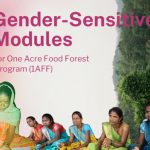
Two resources emerged. A Policy Analysis Report examines food and nutrition security policies through the eyes of the people they are meant to serve. A Gender-Sensitive Training Module extends Raah Foundation’s 1 Acre Food Forest (1AFF) programme, recognising that climate stress rarely falls equally on everyone in a household. Research and community-facing resources accompany both.
More than a presentation
We do not want 8 October to be the day these resources are unveiled and then quietly shelved. We want it to be the day they begin a second life.
That is why the event is designed as a conversation. We are bringing together government representatives, civil society organisations, academics, practitioners, students and community partners to test these products against real needs. We want to hear what works, what is missing, and where each resource could travel next, whether into a policy dialogue, a training programme, an advocacy effort or a future study.
About the University of Toronto India Foundation
The University of Toronto India Foundation is an Indian foundation established as a partnership between the Tata Trusts and the University of Toronto. We work as a connective tissue, bringing researchers, governments, entrepreneurs and communities into sustained collaboration so that knowledge rooted in local contexts can inform solutions that last.
Frequently asked questions
What is From Community Knowledge to Action?
It is a dissemination event in Mumbai on 8 October 2026, where UTIF, YUVA and Raah Foundation will share community-engaged research on inclusive climate action planning and nutrition resilience.
What is IMUCP?
The International Multidisciplinary Urban Capstone Program is a year-long University of Toronto undergraduate program in which multidisciplinary student teams work with Indian universities and community organisations on real-world development challenges.