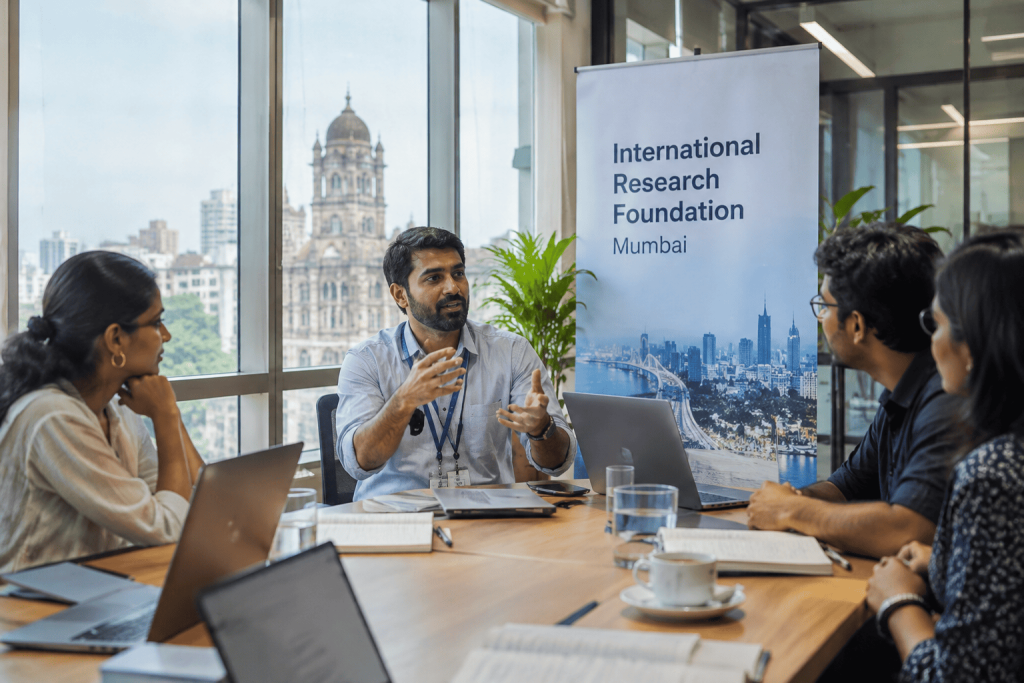
An international research foundation in Mumbai links Indian organisations with world-class academic expertise to tackle problems that local teams often cannot solve alone. The UofT India Foundation follows this model. From its Mumbai base, the Foundation connects University of Toronto researchers with Indian civil society groups, government bodies and academics to build sustainable cities of every size.
What Does the UofT India Foundation Do for Indian Cities?
The UofT India Foundation co-creates practical solutions to urban challenges in India. It brings University of Toronto experts together with Indian partners, funds joint research, supports early-stage climate innovators and trains local researchers. In 2024-25, its second year of operations, the Foundation worked with a six-person team. Its programmes focus on three themes:
- Climate resilience, including climate-tech innovation and heat action
- Sustainable urban infrastructure
- Data-driven sustainability
How Does University of Toronto Collaboration Benefit Indian Partners?
University of Toronto collaboration gives Indian grassroots groups and government bodies direct access to global experts, which closes a real gap in India. The Foundation plays three distinct roles: convenor, champion of interdisciplinary thinking and broker of international problem-solving expertise. As a result, lessons from many geographies get adapted to local conditions, and every project follows a data-driven approach.
- Convenor: brings sectors together and creates forums for public engagement
- Champion: applies global, interdisciplinary methods to Indian issues
- Broker: connects local actors with U of T and Indian academic experts
How Do Research Catalyst Grants Support Urban Sustainability Research in India?
Research Catalyst Grants fund joint studies led by U of T faculty and Indian organisations. The 2024-25 cycle supported five projects, from Odisha’s Drink from Tap water supply model to low-cost walkers for children with disabilities. For 2025-26, the Foundation required joint teams and awarded funds directly to Indian partner organisations. Applications jumped from seven to 22.
Winning 2025-26 projects include:
- Urban flooding in Guwahati
- Generative AI training for Kolkata’s Kumartuli idol-makers
- Green and blue spaces that cool heat islands in Bangalore and Jaipur
What Climate-Tech Startup Support Does the Foundation Offer?
The Foundation supports climate-tech startups through two stages, Innovate and Incubate. In 2024-25, it backed 12 startups with grants and pilot deployments, three times its original target of four. Founders receive funding, technical mentorship from U of T faculty, and workshops on intellectual property, government procurement, impact measurement and fundraising. Better still, they test products in real Indian cities, closing the gap between innovation and deployment.
Innovate: Backing Early-Stage Ideas
Partnerships with IIT Bombay E-Cell, IIT Madras and VIT-TBI help student innovators move from idea to prototype. The IIT Madras Carbon Zero Challenge drew 1,178 applications, and the Foundation committed INR 40 lakh to support five startup teams.
Incubate: Real Pilots With Urban Local Bodies
The Techtonic Challenge, run with Social Alpha, selected 11 startups from 120 applicants. All 11 received first-tranche pilot grants totalling INR 1,96,99,335 in early 2025. Pilots include:
- 15 electric carts with Thiruvananthapuram Municipal Corporation
- Air purifiers and water pipeline monitoring in Pimpri Chinchwad
- A community library built with straw-based panels at TISS M-Ward, Mumbai
Why Work With an International Research Foundation in Mumbai on Capacity Building?
Working with the Foundation gives Indian researchers hands-on training in methods taught at the University of Toronto. Its capacity-building workshops cover data visualisation, mapping, storytelling and mixed research methods. In early 2025, an Urban Data Visualisation series trained 58 participants across Dehradun, Mumbai and Bangalore. A storytelling workshop at TISS Mumbai reached 17 graduate students in urban policy and planning.
- Six Indian PhD researchers received grants to attend the Urban Mixed Methods Workshop in Toronto in July 2024.
- The AI and the City Conference in Bangalore featured 28 research presentations from 18 institutions across 12 countries.
- A partnership with Mahila Housing Trust is building a Heat Action Plan for Jalgaon.
How Can Your Organisation Start a Partnership With the Foundation?
Start by matching your work to one of the Foundation’s three themes: climate resilience, sustainable urban infrastructure or data-driven sustainability. Research teams can prepare for the next grant cycle, startups can follow the Innovate and Incubate challenges, and community groups can explore field partnerships. Every programme is co-created, so partners shape the priorities from the first conversation.
Frequently Asked Questions
Where is the UofT India Foundation based?
The Foundation works through a dedicated team in Mumbai. From there, it builds partnerships with civil society, government bodies and academics across India. Its projects reach Thiruvananthapuram, Pune, Guwahati, Kolkata, Hyderabad, Bangalore, Jalgaon and several other cities.
Can Indian organisations apply for Research Catalyst Grants?
Yes. The 2025-26 call required every team to include at least one University of Toronto researcher and at least one Indian partner. Grant funds went directly to the Indian partner organisation, which gave local teams greater ownership of the research.
Does the Foundation fund early-stage startups?
Yes. Through its Innovate programme, the Foundation supports student and early-stage ventures with mentorship and seed funding. For example, it awarded INR 2.5 lakh to Trinano Technologies, a solar panel coating startup, through the IIT Bombay Eureka! competition.
What if I do not know a University of Toronto researcher?
The Foundation helps you find one. It hosted a webinar on finding U of T collaborators, which 35 India-based participants attended. In the 2025-26 call, 19% of applicants received direct support from the Foundation in identifying a partner.