University of Toronto India Foundation

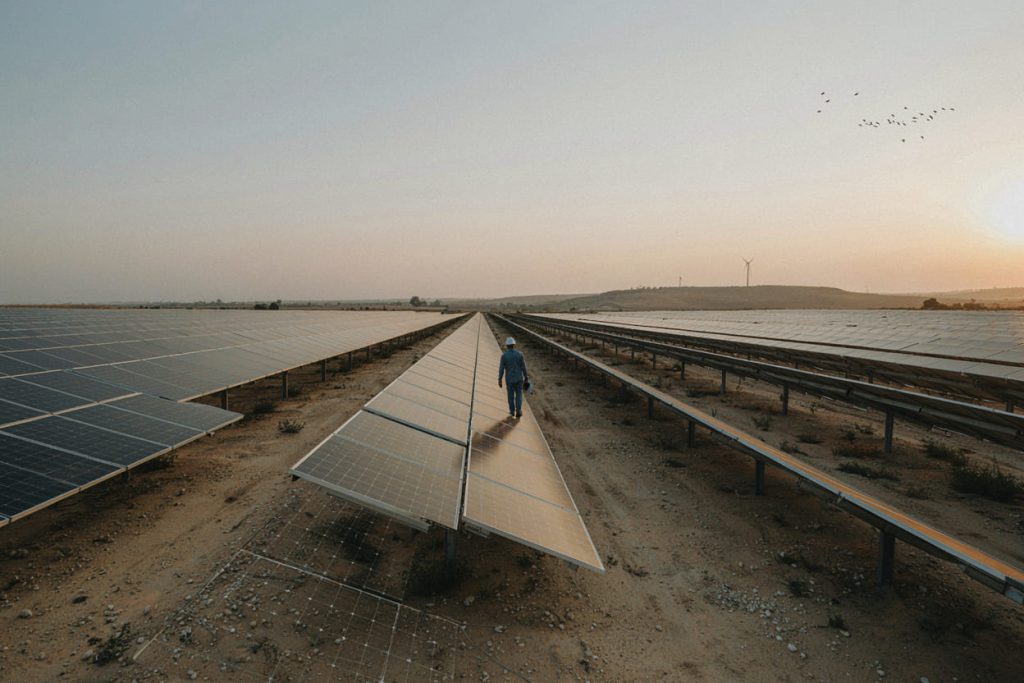
Table of Contents
Can India Meet Its 2030 Renewable Energy Targets?


Summary
Renewable energy in India will likely reach its 2030 capacity target but fall short of the decarbonisation outcome the target was designed to produce. Non-fossil capacity reached 300.50 GW on 31 July 2026, crossing 60 percent of the 500 GW goal. Generation lags badly. Non-fossil sources supplied only 29.2 percent of electricity in 2025-26. Transmission delays, unsigned power purchase agreements and a thin storage base now govern the result. The binding constraint is grid capability, not panel deployment.
Capacity addition is no longer the limiting factor. India installed a record 55.29 GW of non-fossil capacity during 2025-26, including 44.6 GW of solar. The system meant to absorb that output has not kept pace. Between April and June 2026, 8,133 GWh of solar generation was curtailed to protect grid security. A gap has opened between what is built and what is delivered.
The Capacity Record Is Strong
Non-fossil sources now account for more than 54 percent of an installed base of roughly 552 GW. Renewable generation rose from 190.96 billion units in 2014-15 to 477.79 billion units in 2025-26.
| Source | Installed capacity, 31 July 2026 | Share of non-fossil total |
|---|---|---|
| Solar | 164.59 GW | 54.8 percent |
| Wind | 58.14 GW | 19.3 percent |
| Hydro, large and small | 57.24 GW | 19.0 percent |
| Bio-power | 11.75 GW | 3.9 percent |
| Nuclear | 8.78 GW | 2.9 percent |
| Total | 300.50 GW | 100 percent |
Three Constraints Decide the Outcome
Transmission is the first in line for renewable energy in India. Against a 2025-26 target of 15,382 circuit kilometres, India added 12,139. Roughly one in four inter-state transmission schemes runs a year or more behind schedule.
Contracting is the second. Unsigned power purchase agreement capacity stood between 40 GW and 45 GW in April 2026, according to ICRA, while fresh awards fell to 14.7 GW in 2025-26 from 40.6 GW the previous year.
Storage is third. The Central Electricity Authority projects a requirement of 60.63 GW by 2029-30, comprising 18.98 GW of pumped storage and 41.65 GW of batteries. Deployment sits far below that trajectory.
Case Study: Cochin International Airport
Cochin International Airport Limited installed a 100 kWp rooftop pilot in 2013. Measured performance from that pilot justified megawatt-scale expansion. By 2015, the airport ran fully on solar power, and capacity later reached 50 MWp. An on-site 110 kV substation permitted direct daytime self-consumption, with surplus exported to the state grid. Documented output exceeds 250 million units and has avoided more than 160,000 tonnes of carbon dioxide. The sequence matters: pilot, measure, then scale.
Institutional Alignment and Systemic Delivery
That sequence describes how urban systems change. Instrumented pilots produce verified data, and verified data supports replication under governance arrangements that outlast individual officials.
The UofT India Foundation, established in Mumbai in 2023 with support from the Tata Trusts, works across three focus areas. Climate Resilience addresses heat and water stress in Indian cities, where cooling demand shapes the evening peaks that solar cannot serve. Sustainable Infrastructure treats mobility, housing and water as governance problems rather than engineering problems, which is the exact failure mode visible in transmission delays. Data-Driven Sustainability supports applied research and capacity building so that municipal bodies can put energy and emissions data to accountable use.
Two practices carry the work for renewable energy in India. Research and Education produces co-created evidence that Indian institutions can maintain after a project closes. Entrepreneurship offers founders mentorship, networks and the chance to pilot in operating cities. Pilots tested under real conditions generate the performance records that procurement officers and regulators can act upon.
Strategic Conclusion
India’s 2030 outcome rests on three interventions: faster transmission commissioning, disciplined contracting that converts awards into signed agreements, and storage matched to the evening peak. Capacity alone will not deliver decarbonisation. Institutions capable of generating verified evidence and transferring it into public procurement form part of that answer. Collaborative initiatives are documented at the UofT India Foundation.
Frequently Asked Questions
Will India meet its 500 GW non-fossil target by 2030?
Capacity trends support it. Non-fossil capacity reached 300.50 GW by 31 July 2026, above 60 percent of the target, after a record 55.29 GW addition in 2025-26. Transmission and storage delivery remain the open risks.
Why is solar power curtailed in India?
Transmission has not expanded at the pace of generation. Between April and June 2026, 8,133 GWh of solar output was curtailed to maintain grid security, concentrated in states with high renewable penetration.
What share of India’s electricity comes from non-fossil sources?
Non-fossil sources supplied 29.2 percent of generation in 2025-26, equal to 538.97 billion units out of 1,845.921 billion units, despite holding more than 54 percent of installed capacity.