University of Toronto India Foundation

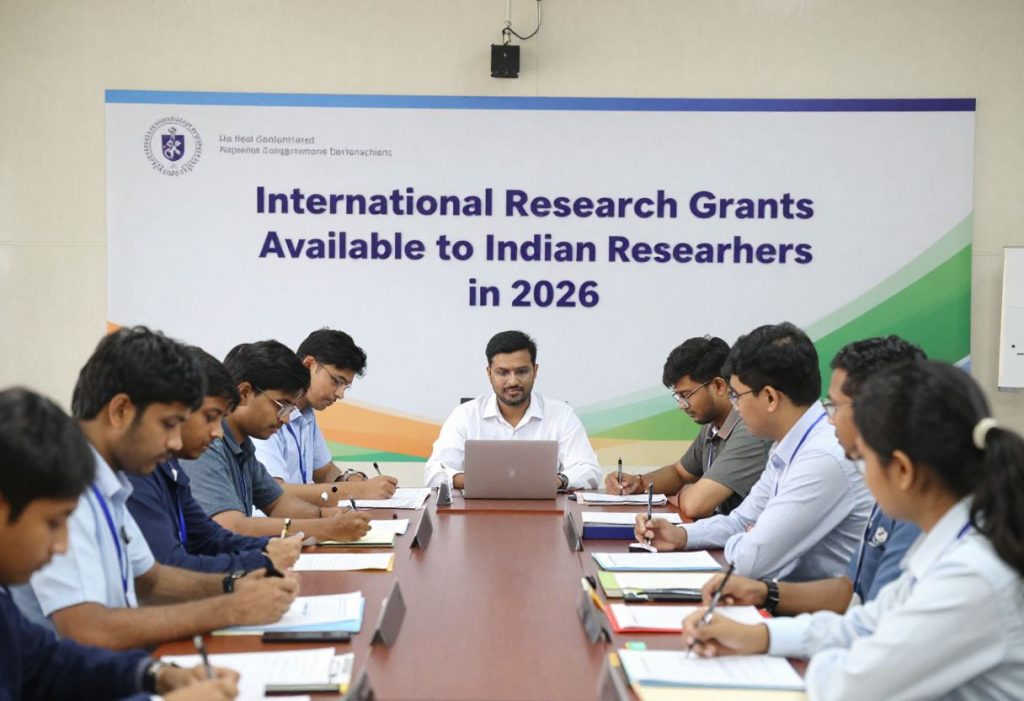
Table of Contents
International Research Grants Available to Indian Researchers in 2026


Research grants will be increasing dramatically; globally focused, research will be caring out in the areas where global issues have the greatest impact, International and Multinational institutions are increasingly interested in placing grants in India for Indian researchers/academics, and this expansion will provide previously not available opportunities for Indian researchers to receive funding; collaborate with international collaborative partners and contribute to/ create knowledge that helps with research on issues facing the world. However, due to the difficulty associated with navigating an international grant, Indian researchers need to understand the available funding sources; their alignment with research interests; how to submit collaborative proposals; and the benefit of international partnerships if Indian researchers are to maximise the opportunities that exist in 2026 or sooner.
The Rise of International-Domestic Research Partnerships
International research funding increasingly emphasizes partnerships between researchers from different countries and institutions. Rather than purely North-to-South funding relationships where international researchers conduct investigations in India, modern collaborative models position Indian researchers as equal partners generating contextual expertise, research relationships, and implementation capacity that international partners lack.
This collaborative paradigm benefits everyone: Indian researchers access international expertise, funding, and networks; international institutions gain access to research contexts, local knowledge, and implementation partners; global challenges receive more sophisticated investigation combining diverse perspectives. The University of Toronto India Foundation exemplifies this approach, explicitly requiring that Research Catalyst Grants partner University of Toronto faculty with Indian researchers as equal collaborators.
The University of Toronto India Foundation's Research Catalyst Grants
For Indian researchers specifically seeking international research funding in 2026, the University of Toronto India Foundation’s Research Catalyst Grants represent an exceptional opportunity deserving detailed consideration. Unlike many international grants requiring researchers to join established research teams, the Research Catalyst Grants explicitly invite Indian organizations to lead proposals in collaboration with University of Toronto faculty.
How It Works: The program supports joint research teams comprising at least one University of Toronto researcher and at least one Indian partner organization. Critically, funding is awarded directly to Indian partner organizations, positioning them as primary awardees and ensuring research benefits flow through Indian institutions. This structure differs substantially from models where international universities receive funding and subcontract with Indian partners.
Research Scope: The program prioritizes research addressing sustainable urban development, climate resilience, water security, food systems, public health, and related challenges. Investigations examining how cities can build resilience, how communities can adapt to climate impacts, how resources can be managed sustainably, and how technology can serve development objectives all align with program priorities.
2026 Opportunities: The Research Catalyst Grants 2025-26 cycle is currently underway, having received 22 applications, more than triple the previous year. This surge reflects growing awareness of the program’s value and Indian researchers’ interest in international collaboration. Subsequent cycles will continue accepting proposals from Indian researchers developing partnerships with University of Toronto faculty.
Distinctive Advantages: Beyond funding, the program provides mentorship from University of Toronto researchers, access to international research networks, exposure to cutting-edge methodologies, and pathways for capacity building. Selected researchers may access training programs, participate in international conferences, and build collaborations extending beyond single projects. Indian partner organizations strengthening through these partnerships become more competitive for subsequent research funding.
Application Support: The University of Toronto India Foundation conducts webinars and information sessions helping researchers understand program requirements and develop competitive proposals. Rather than leaving applicants to navigate independently, the foundation provides scaffolding for success, recognizing that excellent research sometimes fails to secure funding due to application quality issues rather than concept merit.
Other International Research Funding Opportunities
While the UofT India Foundation’s Research Catalyst Grants deserve primary consideration for Indian researchers seeking international partnerships, other opportunities exist:
British Academy’s Newton Fund supports collaborative research between UK and developing country researchers on research grants in India addressing development challenges. The program provides funding directly to both British and Indian institutions, creating genuinely bilateral partnerships.
Swiss State Secretariat for Education supports research collaborations between Swiss and Indian institutions across diverse disciplines. Programs provide funding enabling extended research stays in partner countries, creating deep collaboration.
The European Union’s Horizon Europe Programme includes partnership opportunities with Indian institutions. While primarily for EU-based researchers, Indian researchers can participate as partners in EU-coordinated projects, accessing European funding while contributing their expertise.
TWAS (The World Academy of Sciences) provides research grants enabling scientists from developing countries to conduct research in partner institutions worldwide, including at leading universities in developed countries.
Fulbright Scholar Program supports American researchers visiting Indian institutions and Indian researchers visiting American universities for research collaboration. While focused on individual researchers rather than teams, it provides funding for sustained research engagement.
Leveraging International Partnerships Strategically
Successful navigation of research grants in India and international funding requires strategic thinking:
Identify Genuine Research Questions: Rather than seeking funding to conduct pre-determined investigations, identify research questions worthy of investigation because they address genuine knowledge gaps or policy challenges. International funders increasingly support research answering real questions rather than pursuing predetermined answers.
Build Authentic Partnerships: International collaboration succeeds when researchers share genuine research interests and respect each other’s contributions. Partnerships of convenience for funding access alone rarely produce high-quality research or meaningful collaboration.
Position Indian Researchers Centrally: Rather than positioning international researchers as leads with Indian colleagues in supporting roles, structure proposals highlighting Indian researchers’ leadership. This positioning aligns with funders’ preferences for genuine partnership while ensuring research serves Indian priorities.
Emphasize Implementation Pathways: International funders increasingly require investigators to articulate how research findings will be utilized, whether informing policy, improving practice, or generating technological applications. Researchers able to clearly connect investigations to implementation prove more competitive.
Leverage Institutional Support: Universities increasingly maintain research offices supporting faculty and students in identifying funding opportunities, developing proposals, and managing grants. Researchers should engage institutional support systems rather than pursuing funding independently.
2026 Application Timeline and Next Steps
For researchers interested in the University of Toronto India Foundation’s Research Catalyst Grants, the 2025-26 cycle is underway with applications continuing to be accepted. Researchers should:
- Research Partnership: Identify potential University of Toronto faculty collaborators whose expertise complements your research interests
- Develop Concept: Outline research question, methodology, and anticipated impact
- Contact UofT India Foundation: Reach out to discuss research fit and partnership possibilities
- Attend Information Session: Participate in webinars explaining program requirements
- Prepare Proposal: Develop competitive application highlighting partnership contributions
- Submit Application: Meet submission deadlines and follow program guidelines precisely
The Research Catalyst Grants represent a rare opportunity for Indian researchers to access international funding while maintaining research leadership. Rather than competing in crowded international applicant pools as junior collaborators, Indian researchers through this program position themselves as equal partners in globally significant investigations.
Frequently Asked Questions
Q: Do I need to have an existing relationship with a University of Toronto researcher to apply for the Research Catalyst Grant?
A: No existing relationship is necessary. The University of Toronto India Foundation provides webinars and support helping researchers identify potential collaborators. While some applicants have established connections, many successfully identify partners through program support. The foundation values new partnerships as much as continuing collaborations.
Q: Can I apply if my research doesn’t directly address sustainability or climate topics?
Research Catalyst Grants support research related to sustainable urban development and climate resilience and more broadly to other related areas such as water, food systems, public health, and education. The essence of this program is based on a broad definition of sustainability, which encompasses interrelated multi-dimensional domains. If the research you are conducting contributes to how to create the more sustainable, equitable and resilient systems, then it is likely aligned with the priorities of the program.
Q: How competitive is the Research Catalyst Grant application process?
Extremely competitive. For the 2025-2026 cycle, there were 22 high quality proposals for approximately five grants from the Research Catalyst Grants and therefore the success rate of this cycle is approximately 23%. The level of competition reflects the quality of the program and the strong reputation of the programs rather than any deficiencies of the applicants. Strong proposals that address real-world research questions with well-defined partnerships and clear pathways for implementation generally have a high level of success.
Q: What’s the funding amount and duration of Research Catalyst Grants?
Grants that have been awarded by the Research Catalyst Grants during this time have been between INR 15 and 40 lakhs. The amount depends on the research scope and requirements of the award. Grants are typically for a period of 12 to 20 months and therefore allow sufficient time to conduct meaningful research while also allowing for successful management of the research project. The length of grant and amount of funds are negotiated based on the research objectives and priorities.
Q: How does the University of Toronto India Foundation support beyond funding?
A: Beyond grants, the foundation provides mentorship from faculty, capacity-building workshops on research methodologies, access to University of Toronto networks and resources, opportunities to present research at international forums, and ongoing engagement supporting successful implementation. Indian partner organizations benefit from institutional strengthening through these collaborations.
Take Action Now
If you’re an Indian researcher seeking international research funding in 2026, the University of Toronto India Foundation’s Research Catalyst Grants deserve serious consideration. The program combines funding, international partnership, capacity building, and implementation support in a framework genuinely valuing Indian researchers’ leadership.
Next Steps:
- Visit uoftindiafoundation.com to learn more about the Research Catalyst Grants
- Attend upcoming information webinars explaining program requirements
- Identify potential University of Toronto collaborators aligned with your research
- Develop your proposal showcasing how international partnership strengthens your investigation
Research grants in India are increasingly available from international sources. The University of Toronto India Foundation represents one of the most attractive opportunities for Indian researchers seeking genuine international collaboration. The time to explore this opportunity is now.